
Cents Add Up
Every Decimal Is Protected
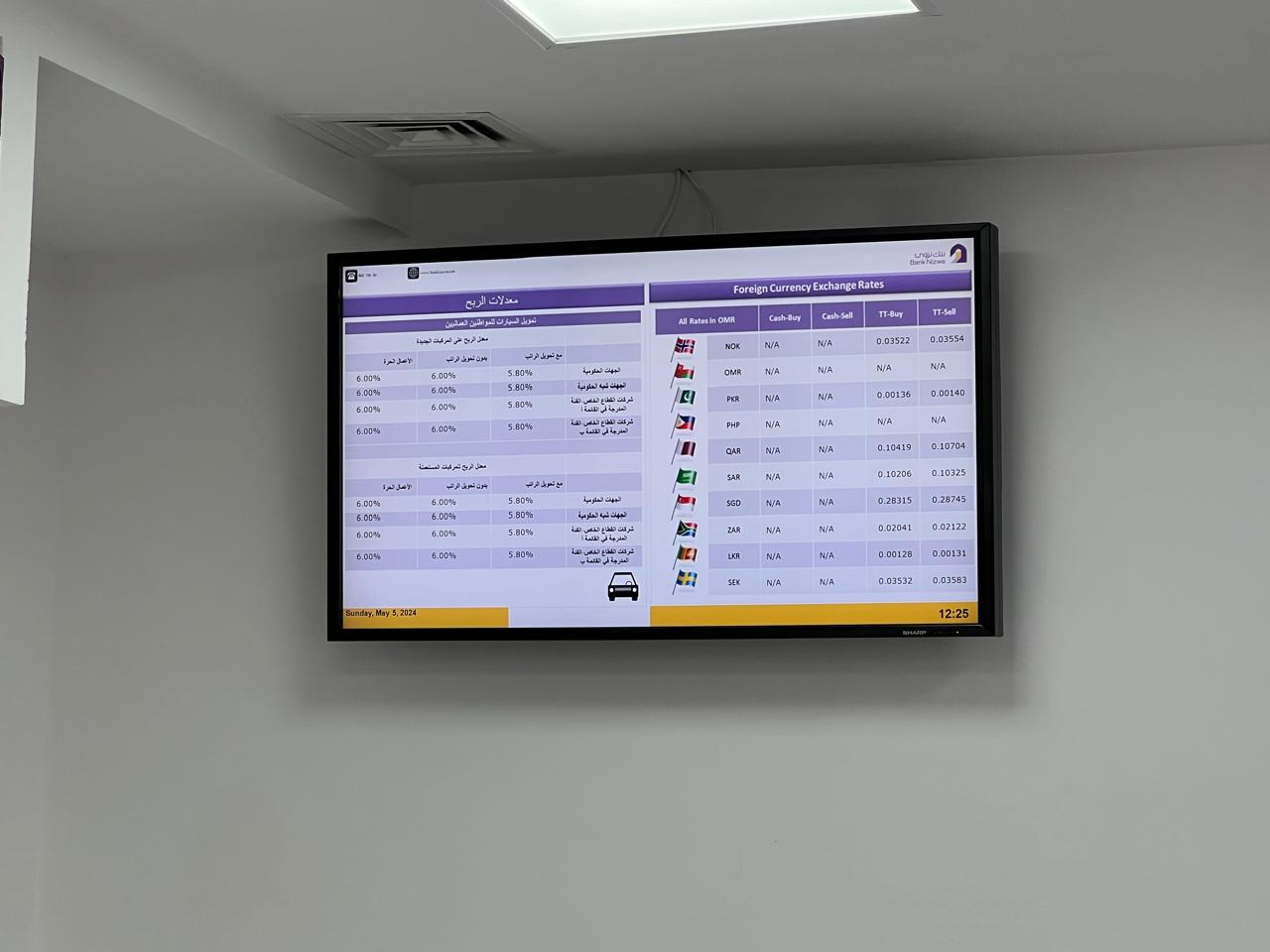
Banks operate under millions of regulations - some ancient, some newly created. On top of global banking standards, every country's central bank adds its own rules. If a bank was formed anytime before 2005, every new project comes with unexpected challenges. In this case: displaying daily forex rates on digital signage.
Normally, people think you can just use an API, adjust rates, and display them. Straightforward. But with banks, it is rarely that easy.
Many banks maintain their own internal forex rates, and this data must be accessed securely. After working with multiple banks on payment gateways and payment apps, we've seen firsthand how resistant banks can be to integrating with core systems.
Giving a digital signage app direct core banking access was not going to happen. The bank refused to expose an API for rate consumption. We suggested a shared folder for rates - rejected as well.
So we had to take a route that is rarely used in modern integrations.
Eventually, the bank agreed to run a cron job inside their database. The script read specific forex fields and pushed them into an entirely separate database on a secure, isolated server, used only for rate distribution.
It sounded like a complicated setup for a few kilobytes of data, but it was the only approach the bank would approve.
Once rates were periodically inserted into the designated DB server, we built a middleware application. This middleware exposed a clean API that the digital signage system could call, pushing updated forex rates to 30+ branches.
In developed countries, open banking is common, so it is easy to forget how cautious many banks still are about external systems.
Need to Integrate Secure Banking Data?
We specialize in high-security integrations with financial institutions. Book a free consultation to explore how we can help.
Get a Free Consultation